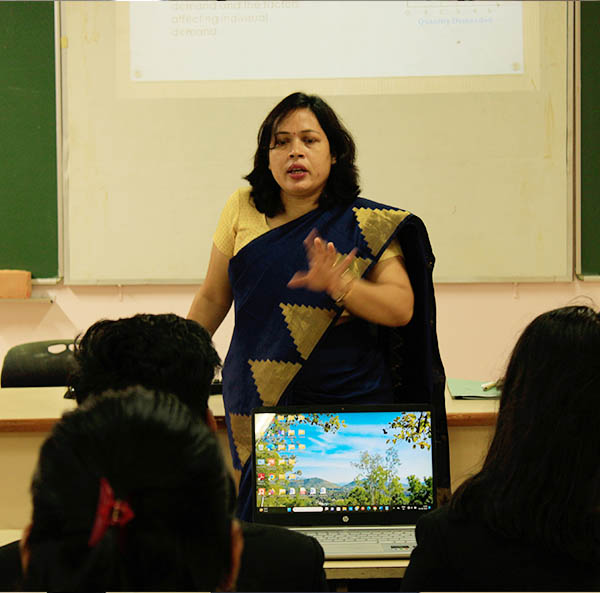
Why does a person want to do his PGDM/MBA ? Is it money, growth in life, knowledge, managerial skill sets? The answer would be a mixture of all these ingredients. The person expects a certain value addition to happen to him/her and value addition does not come easy.
At IMIS, we focus three fundamental aspects viz; Discipline, Leadership, Commitment.
Discipline has been acting as an important value in systematizing the thinking, creating and processing information, at IMIS in every spheres. The sense of discipline has attributed not only to the goal setting process but also contributed enormously to the success of the organization. At IMIS the key to Leadership has always taken the form of accepting higher degrees of responsibilities by every element. The secret of IMIS leaders has been their degree of involvement in achieving the cause as well as the bent of their learning the required behavioral skills. IMIS does not regard Commitment as a dormant activity rather than it emphasizes it as a real time practice. This results in the achievement of excellence in the quality of work life.
This philosophy drives our pedagogy and curriculum. The preceding batches of our alumni have proved their mettle in the tough grind of the corporate world. Their success could be attributed to the rigor and grit of these years at IMIS. With emphasis given to not only the fundamentals of academics, but also all-round development of the individual, the student when he walks out of these doors is no longer a student, but an executive toughened to take on the battles of the corporate world.
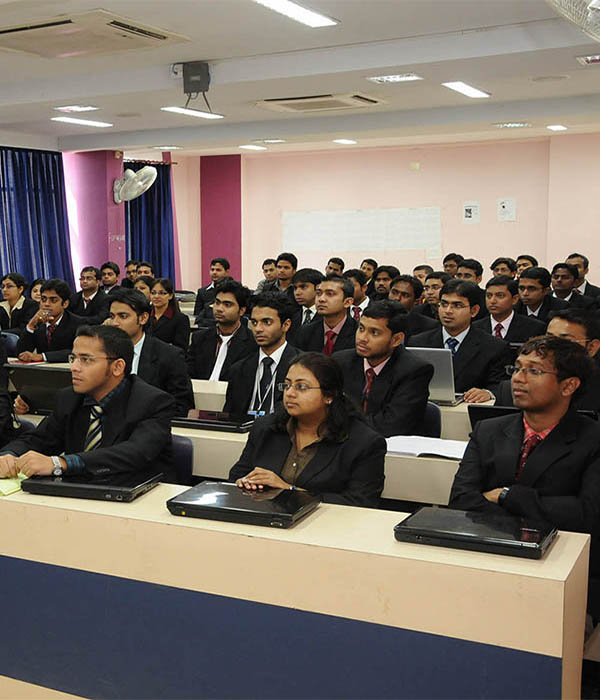
At IMIS, as a part of the endeavor in inculcating a pragmatic approach in business learning process, the journey starts much ahead of the commencement of the session. Once a student joins the program after taking admission, he/she is introduced to the Management Induction Program (MIP). The Management Induction Program is divided into two phases, viz. Your Zip Code and Exordium. YOUR ZIPCODE as the elementary phase of the Management Induction Program aims at exploring and identifying the managerial instincts within the students. YOUR ZIPCODE is designed to orient the students towards professional culture and help them acclimatize with necessary skills required to undergo this program. This is carried out during the intervening period between admission date and commencement of regular sessions.
EXORDIUM, the second stage of Management Induction Program starts after the commencement of regular sessions. During this program, renowned academicians, practitioners and experts from industry are invited for an effective learning session by sharing their views and experiences with the students, who are to be made familiar with the rudiments of management as a profession and its culture prior to the commencement of their course.
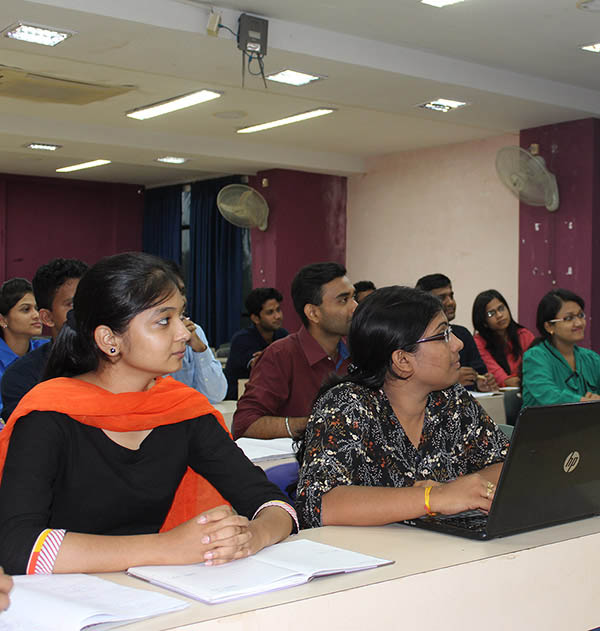
The teaching pedagogy at IMIS is mostly application-oriented. The pedagogical models include Structured Lectures, Case Analysis, Co-operative Learning, Inquiry-based Learning, Practice-based Learning, Technology-based Learning, Development Orientation, Personal Counselling, Continuous Assessment and Evaluation. In cooperative learning, students work together in small groups on a structured activity. They are individually accountable for their work and the work of the group as a whole is also assessed. The system is more industry-centered, while the teacher acts as a facilitator of learning.
On the development front, the institute has made an exclusive arrangement where, one working day in a week is reserved for conducting special sessions for students’ development, viz. Communication Development, Personality Development, Business Etiquette, Mock Interview, Business Quiz, Panel Discussion, Presentation on Contemporary Topics, Assessment Techniques, Students’ Knowledge Improvement Programmes (SKIP), Yoga & Meditation, Foreign Language Training, Students’ Activities etc.
In cooperative learning, students work together in small groups on a structured activity. They are individually accountable for their work, and the work of the group as a whole is also assessed. Cooperative groups work face-to-face and learn to work as a team. A group of students discussing a lecture or working together over the Internet on a shared assignment are both examples of cooperative learning. Cooperative learning differs from traditional teaching approaches because students work together rather than compete with each other individually. This brings positive results such as deeper understanding of content, increased overall achievement in grades, improved self-esteem, and higher motivation to remain on task. Cooperative learning helps students become actively and constructively involved in content, to take ownership of their own learning, and to resolve group conflicts and improve teamwork skills. The common tools used by the faculty members under this model are Field Study/Project Work, Assignment (Internet based/Library Resource-based), Situation Analysis, Simulations, Role Play, Business Games, Class Room Presentations, etc.
“I hear and I forget, I see and I remember, but I do understand when I’m involved.” The last part of this statement is the essence of inquiry-based learning. Inquiry implies involvement that leads to understanding. Furthermore, involvement in learning implies possessing skills and attitudes that permit you to seek resolutions to questions and issues while you construct new knowledge.
The inquiry approach is more focused on using and learning content as a means to develop information-processing and problem-solving skills. The system is more student centered, with the teacher as a facilitator of learning. There is more emphasis on “how we come to know” and less on “what we know.” Students are more involved in the construction of knowledge through active involvement. The more interested and engaged students are in a subject or project, the easier it is for them to construct in-depth knowledge of it. Learning becomes almost effortless when something fascinates students and reflects their interests and goals. The common tools used by the faculty members under this model are Case Discussion, Problem Solving, Brainstorming, Idea Generation, Small-group Exercises, etc.
In management education the learning remains incomplete if proper and adequate emphasis is not given on practice. The class room lectures and discussions supplemented by practical exposure helps the students in building value-based knowledge by assimilating theory with practice. To support this precept, IMIS has been consistently working in creating series of provisions to ensure practical orientation in the learning process and to augment the interaction with the industry. Few of the examples are Summer Training, Research-based Dissertation, Short-term Projects assigned by corporate, Industry Visit, Panel Discussion, Corporate Talks, Guest Talk by Practitioners, Seminar, Workshop, Capsule Programme, etc.
On the development front, the institute gives much stress on blossoming of a Complete Manager by adopting a pragmatic approach in the learning method. The institute has made an exclusive arrangement to facilitate such development orientation. All Saturdays in the academic calendar are reserved to conduct special sessions for students’ development, viz. Communication Development, Personality Development, Business Etiquette, Mock Interview, Business Quiz, Panel Discussion by Students, Presentation on Contemporary Topics, Assessment Techniques, Students’ Knowledge Improvement Programmes (SKIP), Yoga & Meditation, Foreign Language Training, Students’ Activities, etc. The mentor-mentee arrangement at the institute is a unique composition which helps in upholding a compassionate and sensitive relationship required for fostering self-confidence amongst the students while coping with the increased stress.


The academic programs at IMIS call for a professional approach while assessing and evaluating a student’s performance. In the trimester system, assessment and evaluation are done in a continuous pattern. The various evaluation components used are:
- Mid Term Examination
- Term End Examination
- Quiz Tests
- Case Analysis
- Project Assignment
- Field Study
- Presentations
- Class Participation
- Role Play/Simulation Exercises
- Lab Test, etc.